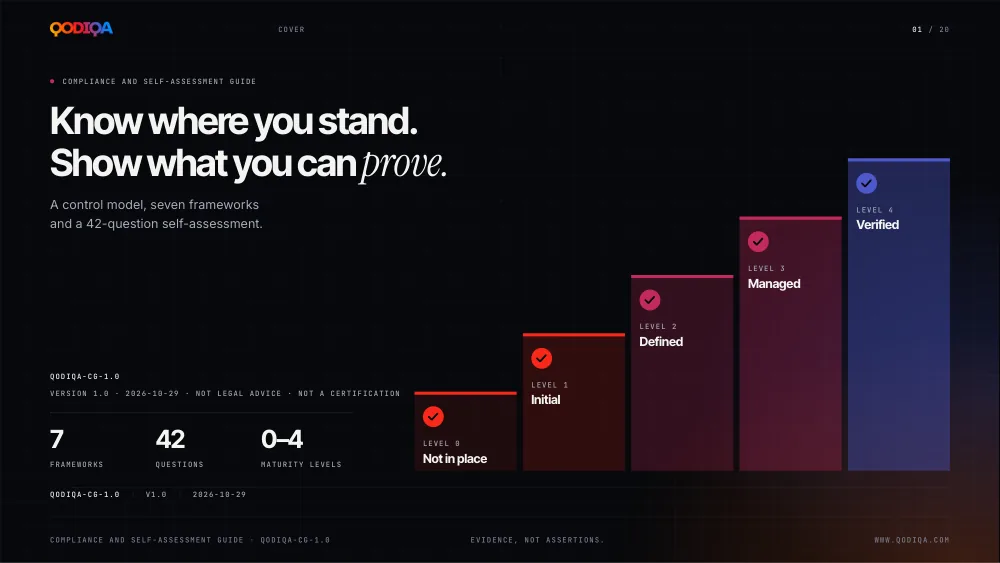
Compliance and Self-Assessment Guide
A control model, seven frameworks and a 42-question self-assessment. Not legal advice, not a certification.
PDF · 20 pages · 1.6 MB · QODIQA-CG-1.0 · v1.0 · 2026-10-29
Download PDF
 EU AI ActRegulation (EU) 2024/1689GDPRRegulation (EU) 2016/679DORADigital operational resilienceNIS2Network and information securityEU Cyber Resilience ActRegulation (EU) 2024/2847
 CoE AI ConventionFramework Convention, CETS 225
 NIST AI RMFAI Risk Management Framework 1.0
 OECD AI PrinciplesCouncil Recommendation
 SOC 2AICPA Trust Services Criteria
 ISO/IEC 42001AI management system standardISO/IEC 27001Information security management
Frameworks
qodiqa checks consent before the AI call and keeps a record anyone can verify offline. See where that supports each framework, and where it does not.
Automatic event logs, human-oversight controls and traceable decisions.
Consent checks, accountability records and security of processing.
Tamper-evident ICT logs, access control and incident records.
Access control, key separation and records for incident handling.
Security-by-design properties and tamper-evident activity records.
Verifiable records, AI-use disclosure and decision documentation.
Evidence for Govern, Map, Measure and Manage subcategories.
Traceability, accountability and robustness records.
Samplable, offline-verifiable evidence for the Security criteria and more.
Event logs, oversight controls and audit evidence for an AI management system.
Logging, cryptography and access-control evidence.
Tell us which one you need mapped. We map only what the open code does today, and state what it does not cover.
Cross-framework matrix
Capabilities in the matrix
Verified capabilities
References mapped
Frameworks
Art. 12DirectArt. 5SupportingNo mapping identifiedMore referencesverifiedpartly verifieddisabled by defaultArt. 12(1)Solid chip: a direct reference to the official textArt. 5(2)Outlined chip: a supporting reference| Capability | AI Act | GDPR | DORA | NIS2 | CRA | CoE AI | RMF | OECD | SOC 2 | 42001 | 27001 |
|---|---|---|---|---|---|---|---|---|---|---|---|
| verifiedConsent artifact | EU AI Act: no direct mapping identified | NIST AI RMF: 2 references
| ISO/IEC 42001: 4 references
| ISO/IEC 27001: 4 references
| |||||||
| verifiedConsent artifact | CoE AI Convention: no direct mapping identified | ISO/IEC 27001: 3 references
| |||||||||
| verifiedReceipt | GDPR: no direct mapping identified | DORA: no direct mapping identified | NIS2: no direct mapping identified | OECD AI Principles: 2 references
| |||||||
| verifiedReceipt | EU Cyber Resilience Act: no direct mapping identified | CoE AI Convention: no direct mapping identified | ISO/IEC 42001: 3 references
| ISO/IEC 27001: 3 references
| |||||||
| verifiedReceipt | NIS2: 2 references
| NIST AI RMF: 2 references
| OECD AI Principles: 2 references
| ISO/IEC 42001: 3 references
| ISO/IEC 27001: 3 references
| ||||||
| verifiedAudit export | GDPR: no direct mapping identified | NIS2: no direct mapping identified | EU Cyber Resilience Act: no direct mapping identified | ISO/IEC 42001: 4 references
| ISO/IEC 27001: 4 references
| ||||||
| verifiedINTENT entry | EU AI Act: 3 references
| EU Cyber Resilience Act: 2 references
| CoE AI Convention: 3 references
| NIST AI RMF: 3 references
| OECD AI Principles: 2 references
| ISO/IEC 42001: 4 references
| ISO/IEC 27001: 3 references
| ||||
| verifiedReceipt | GDPR: 2 references
| DORA: no direct mapping identified | NIS2: no direct mapping identified | SOC 2: no direct mapping identified | ISO/IEC 42001: 2 references
| ISO/IEC 27001: 3 references
| |||||
| partly verifiedCheckpoint | GDPR: no direct mapping identified | DORA: no direct mapping identified | NIS2: no direct mapping identified | SOC 2: no direct mapping identified | ISO/IEC 42001: 2 references
| ISO/IEC 27001: 3 references
| |||||
| verifiedOffline verifier | EU AI Act: no direct mapping identified | DORA: no direct mapping identified | EU Cyber Resilience Act: no direct mapping identified | NIST AI RMF: 2 references
| OECD AI Principles: 2 references
| SOC 2: no direct mapping identified | ISO/IEC 42001: 2 references
| ISO/IEC 27001: 5 references
| |||
| partly verifiedReceipt | EU AI Act: no direct mapping identified | DORA: no direct mapping identified | NIS2: no direct mapping identified | ISO/IEC 42001: 3 references
| |||||||
| verifiedReceipt | GDPR: no direct mapping identified | DORA: no direct mapping identified | NIS2: no direct mapping identified | EU Cyber Resilience Act: no direct mapping identified | SOC 2: no direct mapping identified | ISO/IEC 27001: no direct mapping identified | |||||
| verifiedAudit export | EU AI Act: no direct mapping identified | GDPR: 6 references
| DORA: no direct mapping identified | NIS2: no direct mapping identified | EU Cyber Resilience Act: no direct mapping identified | ||||||
| verifiedAudit export | DORA: no direct mapping identified | NIS2: no direct mapping identified | EU Cyber Resilience Act: no direct mapping identified | OECD AI Principles: no direct mapping identified | ISO/IEC 27001: 3 references
| ||||||
| verifiedAudit export | EU AI Act: no direct mapping identified | NIS2: 2 references
| CoE AI Convention: no direct mapping identified | SOC 2: 3 references
| ISO/IEC 27001: 4 references
| ||||||
| partly verifiedAudit export | EU AI Act: no direct mapping identified | NIST AI RMF: 2 references
| |||||||||
| partly verifiedCI result | EU AI Act: no direct mapping identified | GDPR: no direct mapping identified | DORA: no direct mapping identified | NIS2: no direct mapping identified | EU Cyber Resilience Act: no direct mapping identified | ISO/IEC 27001: no direct mapping identified | |||||
| verifiedReceipt | EU AI Act: no direct mapping identified | GDPR: no direct mapping identified | DORA: no direct mapping identified | NIS2: no direct mapping identified | EU Cyber Resilience Act: no direct mapping identified | NIST AI RMF: 3 references
| ISO/IEC 42001: 3 references
| ||||
| verifiedConfiguration check | EU AI Act: no direct mapping identified | GDPR: no direct mapping identified | DORA: no direct mapping identified | NIS2: no direct mapping identified | EU Cyber Resilience Act: no direct mapping identified | SOC 2: no direct mapping identified | ISO/IEC 27001: no direct mapping identified | ||||
| verifiedReceipt | EU AI Act: no direct mapping identified | GDPR: 2 references
| DORA: no direct mapping identified | NIS2: no direct mapping identified | EU Cyber Resilience Act: 2 references
| NIST AI RMF: 2 references
| ISO/IEC 27001: 4 references
| ||||
| verifiedReceipt | EU AI Act: no direct mapping identified | GDPR: no direct mapping identified | DORA: no direct mapping identified | NIS2: no direct mapping identified | CoE AI Convention: no direct mapping identified | ||||||
| verifiedReceipt | EU AI Act: no direct mapping identified | GDPR: no direct mapping identified | DORA: no direct mapping identified | NIS2: no direct mapping identified | CoE AI Convention: no direct mapping identified | NIST AI RMF: 2 references
| ISO/IEC 42001: 3 references
| ||||
| partly verifiedCI result | EU AI Act: no direct mapping identified | GDPR: no direct mapping identified | EU Cyber Resilience Act: no direct mapping identified | CoE AI Convention: no direct mapping identified | NIST AI RMF: 2 references
| OECD AI Principles: no direct mapping identified | |||||
| verifiedCI result | NIS2: no direct mapping identified | ISO/IEC 42001: 2 references
| |||||||||
| verifiedCI result | NIS2: no direct mapping identified | EU Cyber Resilience Act: no direct mapping identified | CoE AI Convention: no direct mapping identified | NIST AI RMF: 2 references
| |||||||
| verifiedCI result | EU AI Act: no direct mapping identified | GDPR: no direct mapping identified | DORA: no direct mapping identified | NIS2: no direct mapping identified | EU Cyber Resilience Act: no direct mapping identified | CoE AI Convention: no direct mapping identified | NIST AI RMF: no direct mapping identified | OECD AI Principles: no direct mapping identified | |||
| verifiedCI result | EU AI Act: no direct mapping identified | GDPR: no direct mapping identified | DORA: no direct mapping identified | NIS2: no direct mapping identified | EU Cyber Resilience Act: no direct mapping identified | CoE AI Convention: no direct mapping identified | NIST AI RMF: no direct mapping identified | OECD AI Principles: no direct mapping identified | ISO/IEC 42001: no direct mapping identified | ISO/IEC 27001: no direct mapping identified | |
| verifiedConfiguration check | EU AI Act: no direct mapping identified | GDPR: no direct mapping identified | NIS2: no direct mapping identified | CoE AI Convention: no direct mapping identified | ISO/IEC 42001: 2 references
| ||||||
| verifiedAudit export | EU AI Act: no direct mapping identified | GDPR: no direct mapping identified | DORA: no direct mapping identified | EU Cyber Resilience Act: no direct mapping identified | NIST AI RMF: 2 references
| ||||||
| verifiedReceipt | GDPR: no direct mapping identified | DORA: no direct mapping identified | NIST AI RMF: 2 references
| OECD AI Principles: 2 references
| ISO/IEC 27001: 3 references
| ||||||
| verifiedOffline verifier | EU AI Act: no direct mapping identified | GDPR: no direct mapping identified | DORA: no direct mapping identified | EU Cyber Resilience Act: no direct mapping identified | |||||||
| verifiedOffline verifier | GDPR: no direct mapping identified | DORA: no direct mapping identified | NIS2: no direct mapping identified | EU Cyber Resilience Act: no direct mapping identified | NIST AI RMF: 2 references
| ||||||
| partly verifiedReceipt | EU AI Act: no direct mapping identified | GDPR: no direct mapping identified | DORA: no direct mapping identified | EU Cyber Resilience Act: no direct mapping identified | CoE AI Convention: no direct mapping identified | ||||||
| partly verifiedReceipt | EU AI Act: no direct mapping identified | GDPR: no direct mapping identified | DORA: no direct mapping identified | NIS2: no direct mapping identified | EU Cyber Resilience Act: no direct mapping identified | CoE AI Convention: no direct mapping identified | SOC 2: no direct mapping identified | ISO/IEC 27001: no direct mapping identified | |||
| verifiedAudit export | EU AI Act: no direct mapping identified | GDPR: no direct mapping identified | CoE AI Convention: no direct mapping identified | SOC 2: 3 references
| ISO/IEC 42001: no direct mapping identified | ISO/IEC 27001: 4 references
| |||||
| partly verifiedConfiguration check | EU AI Act: no direct mapping identified | GDPR: no direct mapping identified | DORA: no direct mapping identified | CoE AI Convention: no direct mapping identified | NIST AI RMF: no direct mapping identified | OECD AI Principles: no direct mapping identified | ISO/IEC 42001: no direct mapping identified | ISO/IEC 27001: 3 references
| |||
| verifiedConfiguration check | EU AI Act: no direct mapping identified | GDPR: no direct mapping identified | DORA: no direct mapping identified | CoE AI Convention: no direct mapping identified | NIST AI RMF: no direct mapping identified | OECD AI Principles: no direct mapping identified | ISO/IEC 42001: no direct mapping identified | ||||
| verifiedAudit export | EU AI Act: no direct mapping identified | ISO/IEC 27001: 3 references
| |||||||||
| verifiedOffline verifier | EU AI Act: no direct mapping identified | CoE AI Convention: no direct mapping identified | ISO/IEC 42001: no direct mapping identified | ||||||||
| verifiedTest vector | EU AI Act: no direct mapping identified | GDPR: no direct mapping identified | CoE AI Convention: no direct mapping identified | NIST AI RMF: no direct mapping identified | OECD AI Principles: no direct mapping identified | SOC 2: no direct mapping identified | ISO/IEC 42001: no direct mapping identified | ||||
| partly verifiedConfiguration check | EU AI Act: no direct mapping identified | DORA: no direct mapping identified | EU Cyber Resilience Act: no direct mapping identified | CoE AI Convention: no direct mapping identified | OECD AI Principles: no direct mapping identified | ISO/IEC 42001: no direct mapping identified | |||||
| verifiedConfiguration check | EU AI Act: no direct mapping identified | NIST AI RMF: 2 references
| ISO/IEC 42001: no direct mapping identified | ||||||||
| verifiedInclusion proof | EU AI Act: no direct mapping identified | GDPR: no direct mapping identified | DORA: no direct mapping identified | NIS2: no direct mapping identified | SOC 2: no direct mapping identified | ||||||
| verifiedAudit export | EU AI Act: no direct mapping identified | NIS2: no direct mapping identified | CoE AI Convention: no direct mapping identified | NIST AI RMF: 2 references
| ISO/IEC 27001: 3 references
| ||||||
| disabled by defaultCheckpoint | EU AI Act: no direct mapping identified | GDPR: no direct mapping identified | DORA: no direct mapping identified | NIS2: no direct mapping identified | CoE AI Convention: no direct mapping identified | OECD AI Principles: no direct mapping identified | SOC 2: no direct mapping identified | ||||
| verifiedAudit export | DORA: no direct mapping identified | NIS2: no direct mapping identified | EU Cyber Resilience Act: no direct mapping identified | NIST AI RMF: no direct mapping identified | OECD AI Principles: no direct mapping identified | ISO/IEC 27001: 3 references
| |||||
| verifiedAudit export | EU AI Act: no direct mapping identified | DORA: no direct mapping identified | NIS2: no direct mapping identified | EU Cyber Resilience Act: no direct mapping identified | OECD AI Principles: no direct mapping identified | ISO/IEC 27001: 3 references
| |||||
| verifiedAudit export | EU AI Act: no direct mapping identified | GDPR: 2 references
| DORA: no direct mapping identified | NIS2: no direct mapping identified | ISO/IEC 27001: 3 references
| ||||||
| verifiedAudit export | GDPR: no direct mapping identified | NIS2: no direct mapping identified | EU Cyber Resilience Act: no direct mapping identified | ISO/IEC 42001: 3 references
| ISO/IEC 27001: 3 references
| ||||||
| verifiedOffline verifier | EU Cyber Resilience Act: no direct mapping identified | NIST AI RMF: 2 references
| OECD AI Principles: 2 references
| ISO/IEC 42001: 3 references
| ISO/IEC 27001: 5 references
| ||||||
| partly verifiedAudit export | EU AI Act: no direct mapping identified | GDPR: no direct mapping identified | DORA: no direct mapping identified | EU Cyber Resilience Act: no direct mapping identified | CoE AI Convention: no direct mapping identified | NIST AI RMF: 2 references
| OECD AI Principles: no direct mapping identified | ISO/IEC 27001: 2 references
| |||
| verifiedReceipt | GDPR: no direct mapping identified | EU Cyber Resilience Act: no direct mapping identified | OECD AI Principles: 2 references
| SOC 2: no direct mapping identified | ISO/IEC 42001: 2 references
| ||||||
| verifiedConfiguration check | EU AI Act: no direct mapping identified | GDPR: no direct mapping identified | NIS2: no direct mapping identified | CoE AI Convention: no direct mapping identified | OECD AI Principles: no direct mapping identified | ||||||
| partly verifiedConfiguration check | GDPR: no direct mapping identified | CoE AI Convention: no direct mapping identified | NIST AI RMF: 2 references
| ISO/IEC 42001: 2 references
| |||||||
| disabled by defaultConfiguration check | EU AI Act: no direct mapping identified | GDPR: no direct mapping identified | DORA: no direct mapping identified | NIS2: no direct mapping identified | EU Cyber Resilience Act: no direct mapping identified | CoE AI Convention: no direct mapping identified | NIST AI RMF: no direct mapping identified | OECD AI Principles: no direct mapping identified | SOC 2: no direct mapping identified | ISO/IEC 42001: no direct mapping identified | ISO/IEC 27001: no direct mapping identified |
| verifiedConfiguration check | EU AI Act: no direct mapping identified | GDPR: no direct mapping identified | NIS2: no direct mapping identified | EU Cyber Resilience Act: no direct mapping identified | CoE AI Convention: no direct mapping identified | OECD AI Principles: no direct mapping identified | |||||
| partly verifiedConfiguration check | EU AI Act: no direct mapping identified | GDPR: no direct mapping identified | EU Cyber Resilience Act: no direct mapping identified | CoE AI Convention: no direct mapping identified | NIST AI RMF: 2 references
| OECD AI Principles: no direct mapping identified | ISO/IEC 27001: 3 references
| ||||
| partly verifiedAudit export | EU Cyber Resilience Act: no direct mapping identified | CoE AI Convention: no direct mapping identified | NIST AI RMF: 2 references
| OECD AI Principles: no direct mapping identified | ISO/IEC 42001: 2 references
| ISO/IEC 27001: 5 references
| |||||
| verifiedReceipt | NIS2: no direct mapping identified | EU Cyber Resilience Act: no direct mapping identified | ISO/IEC 42001: 3 references
| ||||||||
| partly verifiedConfiguration check | EU AI Act: no direct mapping identified | EU Cyber Resilience Act: no direct mapping identified | CoE AI Convention: no direct mapping identified | NIST AI RMF: 2 references
| SOC 2: 3 references
| ISO/IEC 42001: no direct mapping identified | ISO/IEC 27001: 3 references
| ||||
| verifiedConfiguration check | EU Cyber Resilience Act: 2 references
| CoE AI Convention: no direct mapping identified | SOC 2: 3 references
| ||||||||
| verifiedConfiguration check | EU AI Act: no direct mapping identified | GDPR: no direct mapping identified | CoE AI Convention: no direct mapping identified | OECD AI Principles: no direct mapping identified | |||||||
| verifiedCI result | EU AI Act: no direct mapping identified | GDPR: no direct mapping identified | DORA: no direct mapping identified | NIS2: no direct mapping identified | EU Cyber Resilience Act: no direct mapping identified | CoE AI Convention: no direct mapping identified | NIST AI RMF: no direct mapping identified | OECD AI Principles: no direct mapping identified | |||
| partly verifiedCI result | EU AI Act: no direct mapping identified | GDPR: no direct mapping identified | DORA: no direct mapping identified | NIS2: no direct mapping identified | EU Cyber Resilience Act: no direct mapping identified | CoE AI Convention: no direct mapping identified | NIST AI RMF: no direct mapping identified | OECD AI Principles: no direct mapping identified | SOC 2: no direct mapping identified | ISO/IEC 42001: no direct mapping identified | ISO/IEC 27001: no direct mapping identified |
| verifiedCI result | EU AI Act: no direct mapping identified | GDPR: no direct mapping identified | DORA: no direct mapping identified | NIS2: no direct mapping identified | EU Cyber Resilience Act: no direct mapping identified | NIST AI RMF: no direct mapping identified | OECD AI Principles: no direct mapping identified | SOC 2: no direct mapping identified | |||
| verifiedCI result | EU AI Act: no direct mapping identified | GDPR: no direct mapping identified | DORA: no direct mapping identified | NIS2: no direct mapping identified | CoE AI Convention: no direct mapping identified | NIST AI RMF: no direct mapping identified | OECD AI Principles: no direct mapping identified | SOC 2: no direct mapping identified | ISO/IEC 42001: no direct mapping identified | ||
| verifiedTest vector | EU AI Act: no direct mapping identified | GDPR: no direct mapping identified | DORA: no direct mapping identified | NIS2: no direct mapping identified | EU Cyber Resilience Act: no direct mapping identified | SOC 2: no direct mapping identified | ISO/IEC 42001: no direct mapping identified | ||||
| verifiedCI result | EU AI Act: no direct mapping identified | GDPR: no direct mapping identified | NIST AI RMF: 3 references
| ||||||||
| verifiedCI result | NIST AI RMF: 2 references
| ISO/IEC 42001: no direct mapping identified | |||||||||
| verifiedTest vector | EU AI Act: no direct mapping identified | GDPR: no direct mapping identified | DORA: no direct mapping identified | NIS2: no direct mapping identified | CoE AI Convention: no direct mapping identified | ISO/IEC 42001: no direct mapping identified | |||||
| partly verifiedCI result | EU AI Act: no direct mapping identified | GDPR: no direct mapping identified | DORA: no direct mapping identified | NIS2: no direct mapping identified | EU Cyber Resilience Act: no direct mapping identified | CoE AI Convention: no direct mapping identified | NIST AI RMF: no direct mapping identified | OECD AI Principles: no direct mapping identified | SOC 2: no direct mapping identified | ISO/IEC 42001: no direct mapping identified | ISO/IEC 27001: no direct mapping identified |
| verifiedCI result | EU AI Act: no direct mapping identified | GDPR: no direct mapping identified | DORA: no direct mapping identified | CoE AI Convention: no direct mapping identified | NIST AI RMF: no direct mapping identified | OECD AI Principles: no direct mapping identified | ISO/IEC 27001: 3 references
| ||||
| verifiedCI result | EU AI Act: no direct mapping identified | GDPR: no direct mapping identified | DORA: no direct mapping identified | NIS2: 2 references
| EU Cyber Resilience Act: 2 references
| CoE AI Convention: no direct mapping identified | NIST AI RMF: 2 references
| SOC 2: 3 references
| ISO/IEC 42001: no direct mapping identified | ISO/IEC 27001: 4 references
| |
| verifiedCI result | GDPR: no direct mapping identified | DORA: no direct mapping identified | NIS2: no direct mapping identified | SOC 2: no direct mapping identified | |||||||
A · Consent and Policy
B · Cryptographic Evidence
C · Data Protection
G · Execution, Routing and Provider Controls
H · Agents, Tools and Action Governance
K · Privacy Operations and Data Lifecycle
L · Audit Exports, Compliance and Reporting
M · Operations, Monitoring and Resilience
O · Security Testing, Change Control and Software Assurance
A · Consent and Policy
B · Cryptographic Evidence
C · Data Protection
D · Identity and Access
F · Data Loss Prevention and Response Control
G · Execution, Routing and Provider Controls
I · Identity, Authentication and Tenant Security
J · Cryptographic Key Management and Evidence Integrity
K · Privacy Operations and Data Lifecycle
L · Audit Exports, Compliance and Reporting
M · Operations, Monitoring and Resilience
O · Security Testing, Change Control and Software Assurance
A · Consent and Policy
B · Cryptographic Evidence
D · Identity and Access
G · Execution, Routing and Provider Controls
I · Identity, Authentication and Tenant Security
J · Cryptographic Key Management and Evidence Integrity
L · Audit Exports, Compliance and Reporting
M · Operations, Monitoring and Resilience
O · Security Testing, Change Control and Software Assurance
A · Consent and Policy
B · Cryptographic Evidence
D · Identity and Access
G · Execution, Routing and Provider Controls
H · Agents, Tools and Action Governance
I · Identity, Authentication and Tenant Security
J · Cryptographic Key Management and Evidence Integrity
L · Audit Exports, Compliance and Reporting
M · Operations, Monitoring and Resilience
O · Security Testing, Change Control and Software Assurance
A · Consent and Policy
B · Cryptographic Evidence
C · Data Protection
D · Identity and Access
F · Data Loss Prevention and Response Control
G · Execution, Routing and Provider Controls
H · Agents, Tools and Action Governance
I · Identity, Authentication and Tenant Security
J · Cryptographic Key Management and Evidence Integrity
K · Privacy Operations and Data Lifecycle
M · Operations, Monitoring and Resilience
N · API, SDKs and Developer Integration
O · Security Testing, Change Control and Software Assurance
A · Consent and Policy
B · Cryptographic Evidence
C · Data Protection
D · Identity and Access
E · Content Inspection and Risk Classification
F · Data Loss Prevention and Response Control
G · Execution, Routing and Provider Controls
H · Agents, Tools and Action Governance
I · Identity, Authentication and Tenant Security
J · Cryptographic Key Management and Evidence Integrity
K · Privacy Operations and Data Lifecycle
L · Audit Exports, Compliance and Reporting
M · Operations, Monitoring and Resilience
N · API, SDKs and Developer Integration
O · Security Testing, Change Control and Software Assurance
A · Consent and Policy
B · Cryptographic Evidence
C · Data Protection
D · Identity and Access
E · Content Inspection and Risk Classification
F · Data Loss Prevention and Response Control
G · Execution, Routing and Provider Controls
H · Agents, Tools and Action Governance
I · Identity, Authentication and Tenant Security
J · Cryptographic Key Management and Evidence Integrity
K · Privacy Operations and Data Lifecycle
L · Audit Exports, Compliance and Reporting
M · Operations, Monitoring and Resilience
N · API, SDKs and Developer Integration
O · Security Testing, Change Control and Software Assurance
A · Consent and Policy
B · Cryptographic Evidence
C · Data Protection
D · Identity and Access
E · Content Inspection and Risk Classification
F · Data Loss Prevention and Response Control
G · Execution, Routing and Provider Controls
H · Agents, Tools and Action Governance
I · Identity, Authentication and Tenant Security
J · Cryptographic Key Management and Evidence Integrity
K · Privacy Operations and Data Lifecycle
L · Audit Exports, Compliance and Reporting
M · Operations, Monitoring and Resilience
N · API, SDKs and Developer Integration
O · Security Testing, Change Control and Software Assurance
A · Consent and Policy
B · Cryptographic Evidence
C · Data Protection
D · Identity and Access
E · Content Inspection and Risk Classification
F · Data Loss Prevention and Response Control
G · Execution, Routing and Provider Controls
H · Agents, Tools and Action Governance
I · Identity, Authentication and Tenant Security
J · Cryptographic Key Management and Evidence Integrity
K · Privacy Operations and Data Lifecycle
L · Audit Exports, Compliance and Reporting
M · Operations, Monitoring and Resilience
N · API, SDKs and Developer Integration
O · Security Testing, Change Control and Software Assurance
A · Consent and Policy
B · Cryptographic Evidence
C · Data Protection
D · Identity and Access
E · Content Inspection and Risk Classification
F · Data Loss Prevention and Response Control
G · Execution, Routing and Provider Controls
H · Agents, Tools and Action Governance
I · Identity, Authentication and Tenant Security
J · Cryptographic Key Management and Evidence Integrity
K · Privacy Operations and Data Lifecycle
L · Audit Exports, Compliance and Reporting
M · Operations, Monitoring and Resilience
N · API, SDKs and Developer Integration
O · Security Testing, Change Control and Software Assurance
A · Consent and Policy
B · Cryptographic Evidence
C · Data Protection
D · Identity and Access
E · Content Inspection and Risk Classification
F · Data Loss Prevention and Response Control
G · Execution, Routing and Provider Controls
H · Agents, Tools and Action Governance
I · Identity, Authentication and Tenant Security
J · Cryptographic Key Management and Evidence Integrity
K · Privacy Operations and Data Lifecycle
L · Audit Exports, Compliance and Reporting
M · Operations, Monitoring and Resilience
N · API, SDKs and Developer Integration
O · Security Testing, Change Control and Software Assurance
These are specified or planned, not connected in the shipped gateway, or have no test evidence yet. They carry no references and are not counted in the matrix.
How it fits
A control model, seven frameworks and a 42-question self-assessment. Not legal advice, not a certification.
PDF · 20 pages · 1.6 MB · QODIQA-CG-1.0 · v1.0 · 2026-10-29
Download PDF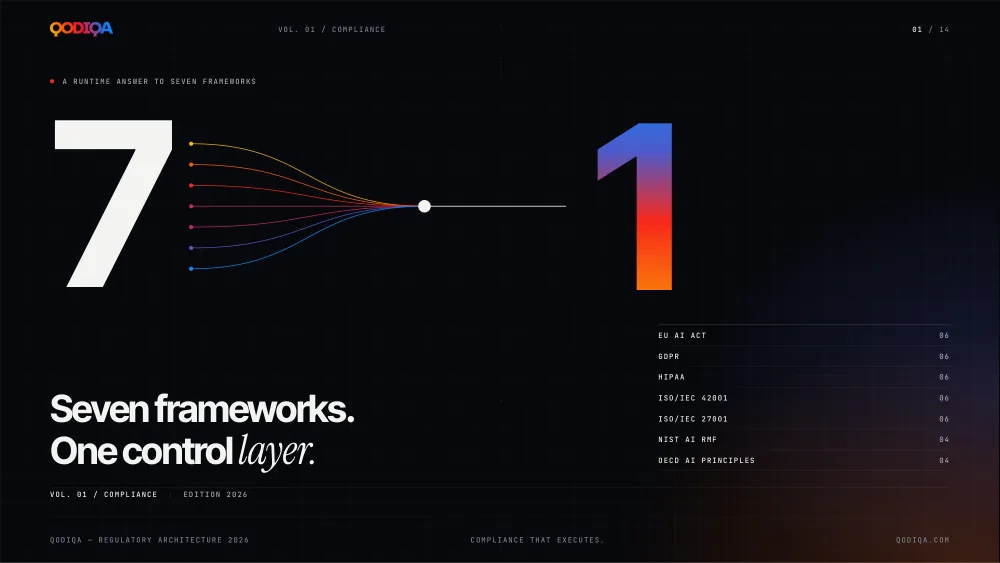
A runtime answer to seven frameworks: one control layer.
PDF · 14 pages · 970 KB · Vol. 01 · Edition 2026
Download PDF